


July Gold Deep Dive: $4,000 Battle & Position Divergence
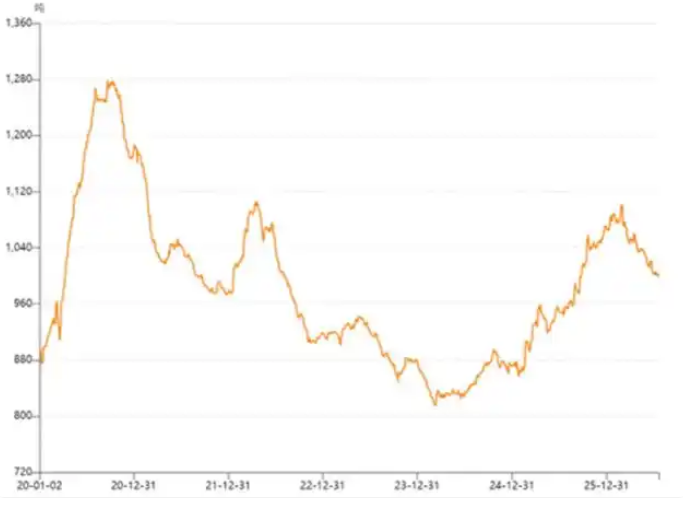
This article deeply analyzes the July gold market, focusing on the $4,000 level battle and long-short position divergence, analyzing Fed policy, inflation stickiness, COMEX net long and ETF holdings changes, and the impact of central bank gold purchases on gold prices.
July Gold Market Deep Dive: Macro Battle at $4,000 and Position Divergence
Keywords: Gold price, Fed policy, inflation stickiness, $4,000 support, COMEX net long, ETF holdings, central bank gold buying
Introduction
Since July, global financial markets have seen fresh turbulence under the dual pressures of macroeconomic data and geopolitical risks. The international gold market stands out, with COMEX gold futures showing significant battle characteristics as they repeatedly test the $4,000/oz level. Although June U.S. inflation data showed signs of easing, hawkish comments from Fed officials and crude oil price shocks from the Middle East reshaped market pricing logic. With the expectation that "high rates may persist longer," gold prices remain under pressure, and the $4,000 level becomes a key battleground for bulls and bears. This report delves into the intrinsic drivers of current gold prices from three dimensions: macro background, price support and constraints, and fund structure.
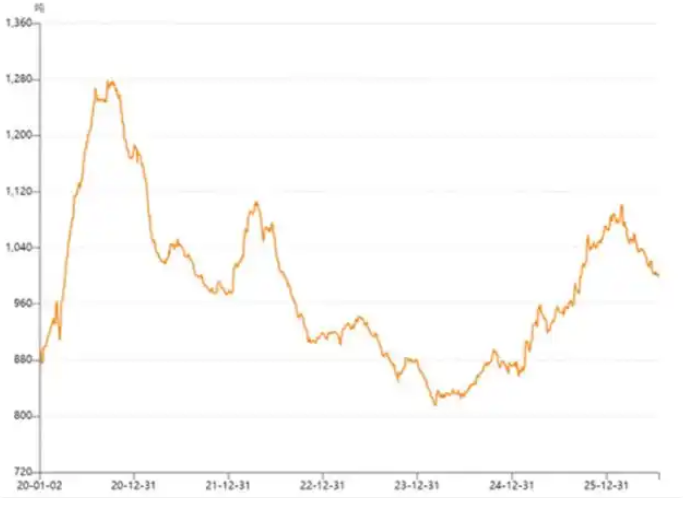
I. Macro Background: Fed Policy Expectations and Reflation Concerns
1. Warsh's Hawkish Stance and Fed Policy Resolve
June U.S. CPI year-on-year growth unexpectedly slowed, briefly igniting optimism for an early rate cut. However, this fleeting excitement was dampened by cautious comments from Fed officials. Several officials, including Governor Warsh, explicitly stated that current inflation remains well above the 2% long-term target, and policy decisions will continue to be strictly data-dependent, refusing to offer any clear forward guidance. With the 10-year Treasury yield climbing back above 4.6%, the persistently high real interest rate significantly raises the holding cost for non-yielding gold, becoming a core macro factor weighing on gold prices recently. The market is beginning to realize that disinflation is not linear, and the "rate-cut trade" window may be further away than expected.
2. Geopolitical Tensions: Surging Oil Prices Intensify Inflation Stickiness
Since early July, navigational safety concerns in the Strait of Hormuz have drawn global market attention. As one of the world's most critical oil shipping routes, any disturbance in the region can roil energy markets. International crude oil prices rose accordingly, with Brent crude briefly hitting $90/barrel. The surge in oil prices pressures gold prices through a clear transmission mechanism:
Oil price rise → higher inflation expectations → tighter monetary policy expectations maintained → stronger Treasury yields and USD → gold price under pressure
This transmission chain reveals gold's vulnerability in a "reflation" environment: when energy prices push up overall inflation expectations, the market instead prices in tighter monetary policy, dampening gold's safe-haven and store-of-value functions. This seemingly paradoxical logic is a true reflection of the current complexity of the gold market.
II. Support and Battle at the $4,000 Price Level
1. Supporting Factors: Multiple Forces Form a Bottom Cushion
Despite the generally bearish macro environment, the $4,000/oz round number shows strong support resilience, driven by multiple factors:
Structural demand from central bank gold purchases: Under the global trend of reserve asset diversification, emerging market central banks continue their strategic gold accumulation. Gold purchases by central banks in China, Poland, India, etc., provide medium- to long-term fundamental demand support. This "official buying" does not chase short-term price fluctuations and is a typical bottom-picking force.
Disinflation signals and room for policy expectation adjustments: The phased decline in June CPI data indicates that while price pressures are sticky, they are not entirely uncontrollable. If future employment or consumer data show signs of economic slowdown, market expectations for a monetary policy shift may re-adjust, potentially restoring gold's appeal.
Easing geopolitical tensions reduce energy risk premium: As tensions around the Strait of Hormuz show signs of easing, Brent crude has retreated from $90 to around $88/barrel, alleviating reflation pressures and easing concerns about tight monetary policy.
Technical dip-buying: In terms of price action, gold quickly recovers after repeatedly breaching the $4,000/oz level, indicating strong buy-side support in this price zone. Quant traders and algorithmic strategies have set long positions here, forming technical support.
2. Constraints: High-Rate Environment Coexists with Inflation Stickiness
However, supporting factors do not imply a trend reversal. The current overall gold price trend remains constrained by two major factors:
Holding cost pressure in a high-rate environment: With the Fed maintaining a tight policy stance, real rates remain relatively high. As a non-yielding asset, gold's opportunity cost is elevated, discouraging large-scale speculative long entries.
Inflation stickiness feedback on policy path: Concerns over inflation stickiness triggered by rising oil prices continue to reinforce market expectations of sustained tight monetary policy. Until core inflation shows a clear downward trend, the Fed is unlikely to signal a dovish stance, limiting gold's upside.
Overall, the $4,000/oz level currently acts more like a "bull bottom" than a "turning point." On one hand, tight monetary policy and high rates cap upward momentum; on the other, central bank buying and market dip-demand buffer the downside, keeping gold price in a range-bound oscillation.
III. Divergence Between COMEX Net Long and ETF Holdings: Deep Insight into Structural Divergence
Notably, the current market exhibits a striking structural characteristic: the non-commercial (fund) net long position in COMEX gold futures and global gold ETF holdings show a clear divergence. This divergence embodies different strategies among market participants in the current macro environment.
1. Gold ETF Holdings: Rebalancing Logic of Long-Term Allocators
Changes in global gold ETF holdings (e.g., SPDR Gold Shares) typically reflect the investment inclinations of medium- to long-term allocators, such as pension funds, insurance companies, and sovereign wealth funds, focusing on long-term risk-return profiles. With the Fed maintaining a tight policy, high rates raise the opportunity cost of holding non-yielding assets. Some allocators choose to reduce gold positions, shifting to fixed-income assets providing stable coupons, putting overall ETF holdings under pressure. Additionally, as the market gradually absorbs the marginal impact of high rates and geopolitical volatility, short-term risk aversion has eased, weakening fund inflows and exacerbating the downtrend in ETF holdings.
2. COMEX Fund Net Long: Speculative Fund Battle
Unlike the cautious stance of ETF funds, the non-commercial (fund) net long position in COMEX gold futures shows resilience. These funds are primarily speculative traders such as hedge funds and commodity trading advisors (CTAs), focusing on short-term price swings and market sentiment. Around the $4,000 level, these speculators tend to place short-term long positions using technical support, while managing risk through option combinations. Furthermore, some macro funds believe that easing inflation data will eventually force the Fed to pivot, leading them to build long positions early, contributing to net long futures positions.
3. Implications of Divergence: Market Structure Fragmentation
This divergence reveals the core contradiction in the current gold market: a structural split between long-term allocators' cautious macro outlook and short-term speculators' bet on a policy shift. The decline in ETF holdings suggests medium- to long-term funds are still waiting for clearer policy pivot signals, while the maintained COMEX net long indicates short-term funds are willing to take risks around the $4,000 level, betting on marginal policy changes.
Historically, when ETF holdings consistently decline while futures net longs remain high, the market is often in a "sentiment bottom" phase but has not yet reached a "fundamental turning point." If the macro environment changes unexpectedly, speculative futures positions can adjust sharply, amplifying price volatility.
Conclusion
The July gold market is in a complex phase where macro factors and micro structures interact. The Fed's hawkish stance, high-rate environment, and reflation concerns from oil price transmission together form the macro fundamental pressuring gold prices. However, the support resilience at the $4,000 level stems from a combination of central bank gold purchases, technical buying, and easing geopolitical premiums. The divergence between COMEX net long and ETF holdings at the fund level further indicates a fragmented market pattern where long-term investors are on the sidelines and short-term speculators are betting.
Looking ahead, the breakout point for gold may come from two directions: first, a material slowdown in U.S. economic data, triggering a repricing of rate cuts; second, further evolution of the Middle East situation, rekindling safe-haven demand. Until then, gold will likely oscillate around the $4,000 level in a range. Investors should closely monitor changes in positioning data to catch early signals of shifting sentiment.

All information, quotes, analysis, and research reports on this website are for reference only and do not constitute any investment advice, trading recommendations, or financial solicitation. Market risk exists, invest with caution.