


Gold and Silver Prices
International Gold Price Breaks $4750: A New Market Landscape Under Geopolitical and Monetary Policy Intertwining in Early October 2026
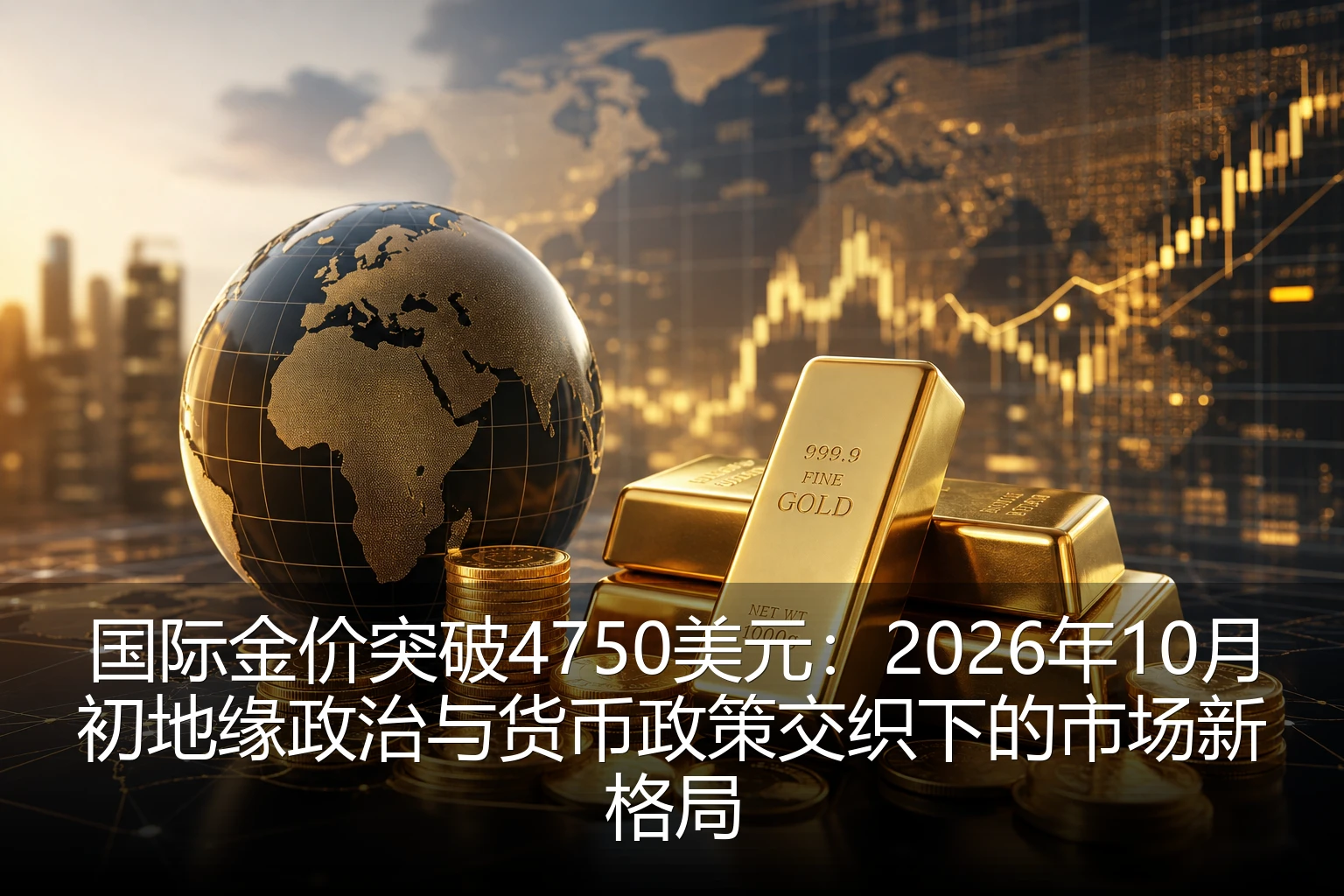
International gold price breaks the $4750 barrier in early October 2026, geopolitical tensions and shifts in global monetary policy jointly drive innovation in the gold market; analyze the current market landscape and investment opportunities.
Gold Price Breaks $4750: A New Market Landscape Under Geopolitical and Monetary Policy Interweaving in Early October 2026
In early October 2026, the international gold market is witnessing a historic moment as spot gold prices break the $4750 per ounce barrier, setting a new historical high. This breakthrough confirms the value of gold as a safe-haven asset amid intensifying global economic uncertainty. This article will delve into the current market structure of gold prices, influencing factors, and future investment opportunities to provide investors with comprehensive market insights.Market Background: Gold Price Breaks New High
According to the latest market data, as of October 7, 2026, the international spot gold price reached $4762.50 per ounce, marking an increase of over 15% from the beginning of the year and over 20% from the same period last year. This price not only breaks the psychological threshold of $4700 but also surpasses the previous historical high set in August 2020, signaling that gold has officially entered the "Gold Price in the $4700 Era." Meanwhile, gold futures prices are also strong, with gold futures contracts for December delivery at $4770 per ounce, indicating market expectations for continued price increases. Gold ETF holdings are also increasing, with the largest gold ETF, SPDR Gold Trust, reaching a record high in holdings, demonstrating a growing demand from institutional investors for gold allocation.Multiple Factors Driving Gold Price Increases
Escalating Geopolitical Tensions
Since the third quarter of 2026, the global geopolitical landscape has undergone significant changes. Escalating conflicts in the Middle East, persistent European energy crises, and tense situations in the Asia-Pacific region have all contributed to heightened safe-haven sentiment in the market. Gold, as a traditional safe-haven asset, is favored by investors, leading to massive inflows into the gold market. Especially in late September, the escalation of conflicts in the Middle East triggered a surge in global crude oil prices, exacerbating market concerns about inflation and further driving the demand for gold as an inflation hedge. Data shows that the geopolitical risk index has risen by over 30% since September, showing a high positive correlation with gold price movements.Expectations for a Global Monetary Policy Shift
Changes in the monetary policy stances of major central banks are also significant drivers of gold price increases. In the third quarter of 2026, the US Federal Reserve hinted at potentially ending its rate hike cycle and considering a rate cut. This expectation of a shift in policy leads to a weakening of the dollar index, providing support for gold prices. Meanwhile, signals of policy shifts from European and UK central banks are also emerging, and the expectation that major economies' monetary policies will converge increases the appeal of gold as a non-credit risk asset. Market analysis suggests that the US Federal Reserve's policy shift will be a key factor driving further gold price increases.Inflation Expectations and Inflation Data
Although major central banks have continued to raise interest rates over the past two years to combat high inflation, inflation data for 2026 shows that inflationary pressures still exist. Latest data indicates that US CPI increased by 3.7% year-over-year in September, although a significant decrease from 9.1% in August last year, it remains above the Federal Reserve's 2% target. Meanwhile, inflation rates in the Eurozone were 3.2% in September, and in the UK, it was 4.1%, both above target levels. The persistent inflation underscores the value of gold as an inflation hedge. Historical data shows that gold typically outperforms other asset classes in an environment of persistently high inflation.Technical Analysis: Key Support and Resistance Levels for Gold Price Trends
From a technical perspective, after the gold price breaks above $4750, it may face technical pullback pressure in the short term. Key support levels are in the range of $4650 and $4600, which are areas of previous transaction density and provide strong support for the gold price. Regarding resistance, $4800 will be the first important psychological level, with potential targets at $4900 and $5000 after a breakout. Looking at technical indicators, the gold's RSI is above 70, suggesting a potential short-term overbought condition, but considering the strength of underlying market fundamentals, the gold price may maintain an upward trend in a high range.Dynamics of Market Participants
Central Bank Gold Buying Remains Strong
The trend of central bank gold buying remains strong in 2026. According to the latest data from the World Gold Council, net central bank gold purchases globally in the first half of the year reached 483 tons, a year-on-year increase of 5%, continuing to a historical high level. Especially central banks in emerging markets, such as China, India, and Turkey, are continuously increasing gold reserves to diversify their foreign exchange reserves and reduce dependence on the US dollar assets. The continued buying by central banks provides a solid bottom support for the gold price. Analysts believe that the trend of central bank buying may continue amid the global trend of "de-dollarization" and increased geopolitical uncertainty, providing long-term support for the gold price.Increase in Institutional Investor Allocation
Institutional investors are also increasing their allocation to gold. Large institutions such as hedge funds, pension funds, and sovereign wealth funds are increasing the proportion of gold in their portfolios. Especially against the backdrop of high global debt levels and slowing economic growth, gold's value as a low-correlation asset is once again being recognized. Data shows that in the second quarter of 2026, global gold ETF inflows reached $18 billion, the highest level since the third quarter of last year. The continuous inflow from institutional investors provides strong support for the gold price.Changes in Retail Investor Sentiment
Retail investors' attitudes towards gold are also changing. As the gold price continues to rise, retail investors' attention to gold is clearly increasing. Demand for gold jewelry sales and gold coin/bar investment is showing an upward trend. Especially in Asia, gold consumption demand in China and India remains strong, providing a fundamental support for the gold price.Future Outlook: Key Factors Influencing Gold Price Trends
Impact of Fed Policy Shift
A shift in the Federal Reserve policy is a key factor influencing future gold price trends. The general market expectation is that the Fed may begin cutting interest rates in the fourth quarter of 2026 or the first quarter of 2027. Historical data shows that interest rate cuts by the Fed are usually accompanied by a rise in gold prices. However, it is important to note that if inflation rebounds, the Fed may delay rate cuts, which will create short-term pressure on the gold price. Therefore, investors need to closely monitor the Fed's monetary policy statements and chart patterns, as well as inflation data changes.Global Economic Prospects
The global economic outlook is also an important factor influencing the gold price. Currently, the global economy faces multiple challenges, including high inflation, high interest rates, and geopolitical tensions. If the global economy enters a recession, the demand for gold as a safe-haven asset will further increase, driving the gold price up. Conversely, if the global economy achieves a soft landing and inflation recedes, the safe-haven demand for gold may weaken, and gold prices may face adjustment pressure. Therefore, investors need to closely monitor changes in global economic data, especially key indicators such as GDP growth and manufacturing PMI. Political Geopolitical Developments The development of geopolitical situations is also an important factor influencing gold prices. Currently, geopolitical risks such as conflicts in the Middle East, the European energy crisis, and tensions in the Asia-Pacific region still exist. If these risks escalate further, they will enhance the safe-haven demand for gold and drive gold prices higher. Conversely, if geopolitical tensions ease, the safe-haven demand for gold may weaken, and gold prices may face adjustment pressure. Therefore, investors need to closely monitor the development of geopolitical situations, especially the situation of conflicts in the Middle East. Investment Strategy Recommendations Long-Term Allocation Strategy For long-term investors, gold still has important allocation value as part of a portfolio. Historical data shows that gold can reduce overall risk and increase risk-adjusted returns in a long-term investment portfolio. It is recommended that investors maintain gold's proportion in their portfolio between 5% and 10%, with the specific proportion adjustable according to individual risk tolerance and market conditions. In the current environment of high inflation, high interest rates, and geopolitical tension, increasing the allocation to gold may be a wise choice. Short-Term Trading Strategy For short-term traders, the current gold price is at a historical high, and technical indicators suggest a potential for short-term overbought conditions, so caution is advised. Traders should watch the support levels of $4650-$4600. If gold prices fall to these levels and gain support, buying low may be considered. At the same time, attention should be paid to the resistance level of $4800. If gold prices break this threshold, they may rise further to $4900 and $5000. Traders can set reasonable stop-loss and take-profit points based on their risk tolerance and trading strategy. Diversified Investment Methods Investors can participate in the gold market through various methods, including physical gold (coins, bars), gold ETFs, gold futures, and gold stocks. Each investment method has its own characteristics and risks, and investors can choose the suitable investment method based on their needs and preferences. Physical gold is suitable for long-term holding, but storage and insurance costs need to be considered. Gold ETFs have good liquidity and trading convenience, suitable for short-term trading. Gold futures have high leverage effects and high risk, suitable for experienced traders. Gold stocks are related to gold prices but are also affected by company business conditions, and volatility is usually greater than the price of gold itself. Conclusion In early October 2026, international gold prices broke above $4750, setting a new historical high, marking a further confirmation of gold as a safe-haven asset against the backdrop of increasing global economic uncertainty. Rising gold prices are driven by multiple factors, including geopolitical tensions, expectations of a shift in global monetary policy, and inflationary pressure. Looking to the future, factors such as a shift in US Federal Reserve policy, the outlook for the global economy, and the development of geopolitical situations will continue to influence price trends. For investors, gold still holds important allocation value as part of a portfolio, especially in the current environment of high inflation, high interest rates, and geopolitical tension. However, it should be noted that the gold price is at a historical high, and there may be technical pullback pressure in the short term. Investors should formulate reasonable investment strategies based on their risk tolerance and investment objectives, diversify their allocations to cope with market uncertainty.
All information, quotes, analysis, and research reports on this website are for reference only and do not constitute any investment advice, trading recommendations, or financial solicitation. Market risk exists, invest with caution.