


Gold and silver plunge as banks tighten precious metals leverage
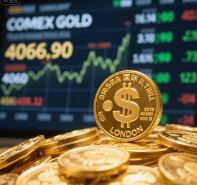
On June 23, gold and silver prices both pulled back, and volatility in the precious metals market intensified. Many banks raised margin ratios and tightened leverage in quick succession. This article examines why gold and silver fell, how bank policies changed, and the risks of investing in precious metals.
Gold and silver prices both plunge as banks rapidly tighten leverage: is the precious metals market entering a new cooling phase?
Keywords: gold prices, silver prices, precious metals investment, bank margin requirements, deleveraging, international gold prices, market volatility
Introduction
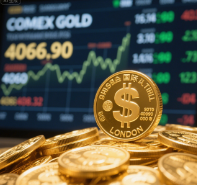
On June 23, the global precious metals market saw a clear pullback: spot gold fell below $4,100/oz, hitting a new low in nearly two weeks; spot silver dropped below $62/oz, with a single-day loss approaching 5%. At the same time, precious-metals-related stocks in the A-share and Hong Kong markets came under pressure, with several gold stocks falling sharply and market sentiment cooling quickly.
This decline was not an isolated event, but the result of a combination of shifting global macro expectations, changes in liquidity, and a rotation in risk appetite. More importantly, amid rising price volatility, many banks have been raising margin ratios for precious metals deferred contracts in rapid succession, and some institutions have even announced business-model adjustments. The era of “high leverage” in precious metals investing is being further squeezed.
1. Why are gold and silver suddenly under pressure?
From the market action, gold and silver weakening together shows that the market is not simply being driven by supply and demand changes in a single product, but by a phase shift in the overall pricing logic of precious metals assets. Recently, renewed hawkish expectations for U.S. monetary policy have become an important trigger for the adjustment.
On Monday local time, Bank of America expected the Federal Reserve to raise rates three more times this year, by 25 basis points each in September, October, and December. Meanwhile, the CME FedWatch Tool showed that traders’ expected probability of a December rate hike had climbed to 89%. This means the market is repricing a “higher for longer” interest-rate environment, which typically weighs on non-yielding assets like gold.
One of the core drivers behind gold’s rise is the expectation of falling real interest rates and weakening dollar credit. Conversely, once the market again believes rates will stay elevated for longer, gold’s appeal declines. Silver has both financial and industrial attributes, and when precious metals are under pressure overall, it often swings more sharply, so its losses are usually steeper as well.
2. Why are banks raising margin requirements so aggressively?
More concerning than the price decline is the continued tightening of leverage for precious metals trading by banks. Starting June 22, banks including Guangfa Bank, Huaxia Bank, and Bank of China successively issued notices raising the margin ratio for agency personal precious metals deferred contracts traded on the Shanghai Gold Exchange. Some raised it from 100% to 140%, while others adjusted it from around 99.9% to above 120%.
This is not the first round of tightening. Since June, banks such as China Construction Bank, ICBC, Agricultural Bank of China, and China Merchants Bank have already adjusted margin requirements for related products. In February this year, several major banks had even raised margin ratios uniformly from 80% to 100%. The market generally believes the leverage room in these contracts has been significantly compressed, and some see it as deleveraging entering a deeper stage.
The main purpose of banks’ move is to reduce clients’ risk of forced liquidation during sharp volatility. In recent years, single-day swings in gold and silver have continued to widen, with prices often moving by hundreds of dollars in a short period. For highly leveraged positions, such moves can easily trigger forced liquidation or even a chain reaction of margin calls. If liquidations become concentrated, extreme cases could also worsen market liquidity and trigger stampede-like selling.
3. The investment logic of precious metals is being reshaped
From an investment perspective, the precious metals market has not lost its long-term allocation value, but the trading logic is shifting from “high-volatility speculation” to “low-leverage allocation.” This means strategies that once relied on short-term leverage to magnify gains will face higher barriers and greater uncertainty in the future.
On the one hand, major international banks have begun to diverge on short-term gold trends, with some even turning bearish. Goldman Sachs recently lowered its gold target price, Citi also issued a cautious short-term outlook, and Morgan Stanley cut its medium- to long-term target range. A common thread in these views is that the Fed’s rate-cutting pace may be pushed back, and real rates may stay elevated longer than previously expected.
On the other hand, precious metals are also diverging internally. Gold is more affected by the macro-financial environment, while silver, platinum, and palladium also have a certain industrial demand component, so their elasticity may be greater when economic expectations improve or manufacturing recovers. But at this stage, global risk assets remain highly sensitive in pricing, and the market is more likely to react quickly to rates, the dollar, and geopolitical developments.
4. Medium- and long-term support remains, but short-term volatility cannot be ignored
Although short-term pressure is evident, the medium- and long-term logic for precious metals has not been fully reversed. Shenwan Hongyuan Futures points out that the geopolitical risk backdrop remains elevated, the restructuring of the global political and economic order continues, U.S. fiscal pressure is increasing, the de-dollarization process has not stopped, and global central banks are still increasing gold reserves.
Structurally, gold remains an important asset-allocation tool for central banks, sovereign wealth funds, and long-term capital. Its value lies not only in safe-haven demand, but also in its ability to hedge credit risk, currency overissuance risk, and geopolitical conflict risk. Silver is more volatile, but it also has demand support in areas such as new energy and electronics manufacturing, so it still has long-term potential.
That said, macro tailwinds do not mean prices can only rise in one direction. What truly determines short-term moves is often expectations for Fed policy, changes in the dollar index, the level of real interest rates, and market positioning. Once longs become crowded and leverage is too high, prices may still go through a deep correction first, even if the long-term logic remains intact.
Conclusion
Overall, the simultaneous plunge in gold and silver prices is both a result of the market repricing the Fed’s policy path and a reflection of proactive cooling by leveraged capital at elevated levels. The fact that many banks have raised precious metals margin ratios shows that both regulators and financial institutions are guarding against volatility risk, and the investment environment is becoming more cautious.
For ordinary investors, the key is not chasing short-term rallies and selloffs, but position management and risk control: lower leverage, avoid oversized positions, and stay alert to high-volatility contracts. These are basic principles for dealing with sharp swings in the precious metals market. From a medium- to long-term perspective, gold and silver still have allocation value, but before policy expectations become clearer, the market is likely to continue showing the characteristics of “high volatility, strong differentiation, and strict risk control.”

All information, quotes, analysis, and research reports on this website are for reference only and do not constitute any investment advice, trading recommendations, or financial solicitation. Market risk exists, invest with caution.