


Gold Market at Critical Juncture: Central Bank Purchases & Long-Term Value
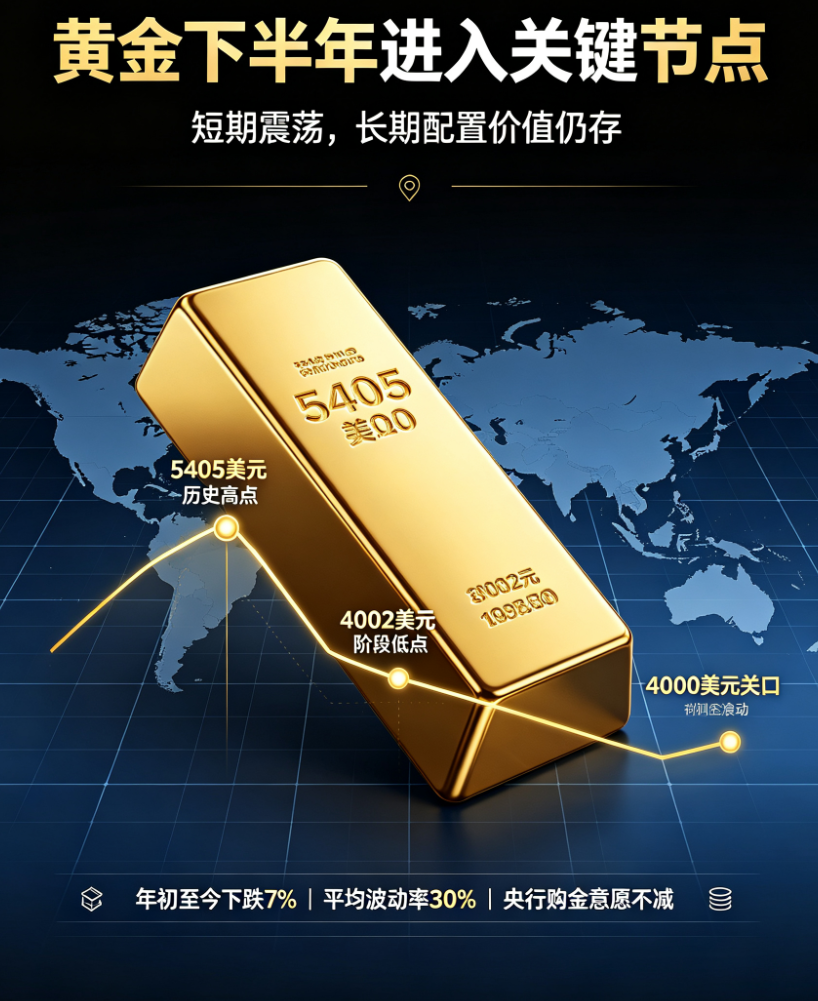
The gold market experienced drastic fluctuations in 2026. The World Gold Council outlook indicates a critical juncture in H2. Despite short-term pressure, ongoing central bank purchases, monetary overissuance, and limited supply support gold's long-term value, making it a core option for global asset allocation.
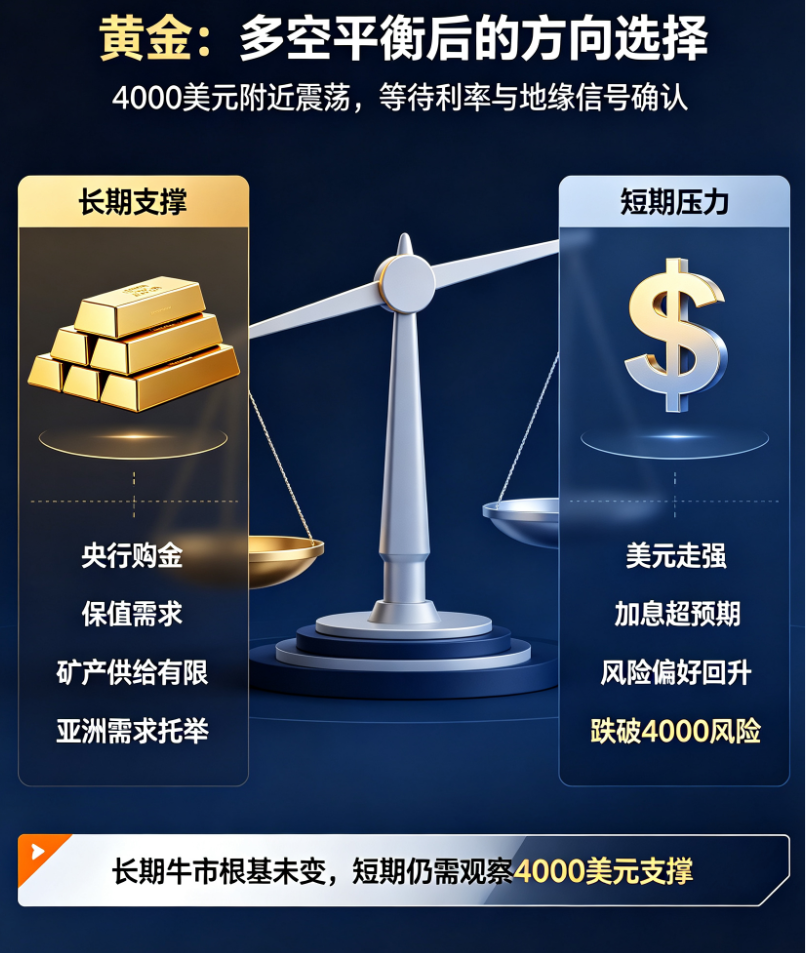
Gold Market at Critical Juncture: Global Allocation Asset Supported by Central Bank Purchases and Long-Term Value
Keywords: Gold market, central bank gold purchases, geopolitics, interest rate environment, asset allocation, long-term value
Introduction
In 2026, the global gold market experienced drastic fluctuations, from a strong rally at the beginning of the year to a significant correction by mid-year. According to the latest "2026 Global Gold Market Mid-Year Outlook" released by the World Gold Council, after the sharp volatility since the start of the year, gold will enter a critical juncture in the second half, with its trend influenced by multiple uncertainties including geopolitical tensions, changes in the interest rate environment, and investor sentiment. Despite short-term pressure, institutions generally believe that gold's long-term value as a global allocation asset remains solid, with the core logic being sustained central bank purchases, hedging demand from monetary overissuance and debt expansion, and limited mine supply supporting gold prices.
I. First Half Review: Gold Performance Amid Increased Volatility
From a full-year perspective, the gold market experienced a highly dramatic trajectory. In late January, gold prices surged to new all-time highs driven by strong Asian session trading, briefly reaching a record high of $5,405 per ounce (LBMA afternoon gold price). However, entering June, market sentiment reversed sharply, with gold prices falling back to a low of $4,002 per ounce. This drastic volatility resulted in a year-to-date decline of approximately 7% in gold prices and an increase in average volatility to 30%.
Today, international gold prices experienced a pattern of first falling then rising. The day's opening price was $4,017.68, with an intraday high of $4,063.42 and a low of $3,942.43, ultimately closing at $4,007.26. Analyst Zhai Rui from the Eastern Gold Research & Development Department told a Cailianshe reporter: "Overall, the current bearish trend has not reversed, and we expect gold prices to remain weak and volatile in the short term." However, after consecutive declines, gold prices showed significant support below the $4,000 level, with long and short forces gradually balancing, providing a potential opportunity to build a temporary bottom.
 Figure note: In the first half of 2026, international gold prices experienced drastic fluctuations from historical highs to significant corrections, especially showing strong support during the Asian session.
The World Gold Council's short-term gold price performance attribution model (GRAM) analysis shows that the dominant factor driving gold performance in the first half was rising geopolitical risks, with the US-Iran conflict being particularly significant. At the same time, momentum factors such as investor position adjustments and profit-taking also played an important role. As the market reassessed expectations for interest rates and the US dollar, the impact of opportunity cost on gold performance was a mixed and complex picture.
A noteworthy structural change is that Asian session trading has significantly supported gold prices, while US session trading has been relatively weak. Global gold ETFs saw net inflows overall in the first half, with the increase mainly concentrated in the Asian market. This regional distribution characteristic is an important reason for the above-mentioned session performance divergence, and also reflects the increasingly important role of Asian investors in global gold price discovery.
II. Central Bank Gold Purchase Intention Remains Strong: Structural Demand Continues to Release
Despite the recent gold price correction, central banks' willingness to allocate to gold remains strong. The latest annual survey by the Official Monetary and Financial Institutions Forum (OMFIF) shows that about 61% of surveyed central banks expect gold prices to stabilize between $5,000 and $6,000 per ounce by June 2027. This expectation reflects central banks' firm confidence in gold's long-term value, and also means that the global official sector will maintain a high level of gold purchases in the foreseeable future.
Behind central bank gold purchases are deep strategic considerations. Against the backdrop of continued differentiation in the global geopolitical landscape and adjustments to the US dollar credit system, gold, as the ultimate means of payment beyond sovereign credit, has an increasingly prominent reserve currency attribute. For emerging market countries, increasing gold holdings is not only a pragmatic choice to optimize foreign reserve structure and reduce dependence on the US dollar, but also a strategic preparation to deal with extreme risk scenarios.
Juan Carlos Artigas, CEO of the Americas and Global Head of Research at the World Gold Council, emphasized: "The gold market has sent a clear signal this year: gold is a truly global asset. Gold prices reflect macroeconomic and geopolitical dynamics worldwide, not just limited to the United States. This is one reason why gold can provide investors with a valuable observation perspective."
III. Second Half Outlook: Critical Juncture Under Multiple Intertwining Factors
Looking ahead to the second half, the World Gold Council expects gold to continue serving as a barometer of the global macroeconomy. Unlike assets primarily driven by domestic factors, gold reflects the demand of global consumers, investors, and institutions. This means that any regional event may be transmitted to the gold market through the global asset allocation chain.
Interest Rate Environment: One of the Most Critical Variables
Current market consensus shows that the Federal Reserve may raise interest rates at least once in 2026, with the time window likely falling in October. Meanwhile, the Bank of England, the Bank of Japan, and the European Central Bank will all tighten monetary policy. US inflation in the second quarter is expected to peak at around 3.9%. If there are no major changes in the above environment, the report expects gold prices to trade around $4,100 per ounce for the year, with a fluctuation range of approximately ±5%.
On the downside, a stronger US dollar, larger-than-expected rate hikes, and a rebound in market risk appetite are the main headwinds for gold prices. If gold prices remain below $4,000 per ounce, it may trigger further selling pressure. However, according to historical experience, if gold prices fall more than 10% from current levels, it may trigger "buy-the-dip" demand from long-term investors in multiple regions, forming strong bottom support.
Geopolitical and Economic Risks: Two-Way Driving Factors
The report analyzes that if the geopolitical or economic situation deteriorates further, or if interest rate expectations shift, gold may resume its upward trend. However, only if the signal of a global economic slowdown is strong enough can it push gold prices to break upward. In other words, gold has both "safe-haven" and "pro-cyclical" attributes in the second half, and its performance will be highly dependent on the evolution path of the macro environment.
 Figure note: The World Gold Council's mid-year outlook report points out that gold's role in global asset allocation is increasingly important, with central bank purchases and long-term investment demand forming the foundation of market resilience.
IV. Institutional Views: Gold's Long-Term Bull Market Foundation Is Solid
Although short-term prices are under pressure and safe-haven attributes have weakened, mainstream investment institutions have not turned bearish on gold's long-term trend. J.P. Morgan pointed out in its latest research report that gold remains a high-quality allocation asset, with the core logic being: first, continued global central bank purchases provide stable structural demand for the market; second, hedging demand from monetary overissuance and debt expansion will not fade in the long run; third, limited mine supply continues to support gold prices.
The institution's research report further noted that gold prices have risen more than 170% in five years, with geopolitical fragmentation and currency depreciation being core driving forces. Short-term adjustments are only periodic consolidation, and the long-term bull market foundation remains solid. From historical experience, a certain degree of correction after a significant rally is a normal market adjustment, which instead provides better entry opportunities for long-term investors.
The World Gold Council's report also confirmed this view from another angle: "Interest rates are important, and we expect them to be one of the key variables in the second half; but gold's performance is not driven by a single factor. This year, gold prices have been under pressure near $4,000 per ounce, but have also rebounded multiple times, mainly supported by endogenous demand from long-term investors in multiple regions. The structural demand from global central banks, institutional investors, and consumers is exactly the foundation supporting gold's resilience."
Conclusion
Overall, the gold market in the second half of 2026 is at a critical juncture where multiple uncertainties are intertwined. In the short term, changes in interest rate trends, the US dollar's trajectory, and geopolitical developments will continue to dominate gold price volatility, and the market may maintain a range-bound pattern. However, from a medium- to long-term perspective, continued central bank purchases globally, deep restructuring of the monetary system, and investors' structural demand for store-of-value assets together constitute a solid value foundation for gold.
For investors, the current moment may be an important opportunity to review their own asset allocation strategies and re-examine the role of gold in their investment portfolios. As unanimously recognized by top global investment institutions, gold, as a truly global allocation asset, will not see its long-term value changed by short-term fluctuations. In an era of increased uncertainty, gold's functions of preserving value, hedging risk, and diversifying risk will continue to make it an indispensable ballast in investment portfolios.

All information, quotes, analysis, and research reports on this website are for reference only and do not constitute any investment advice, trading recommendations, or financial solicitation. Market risk exists, invest with caution.